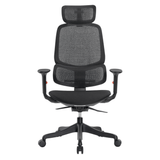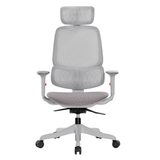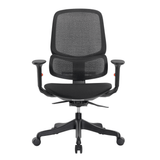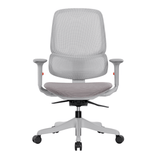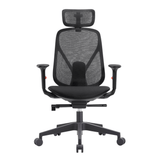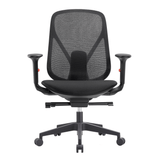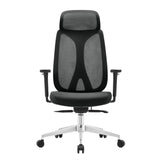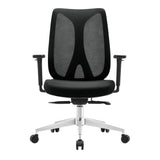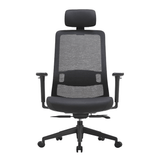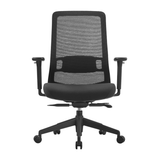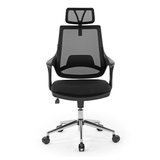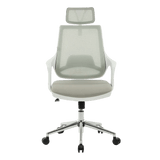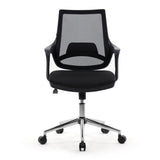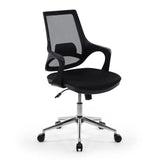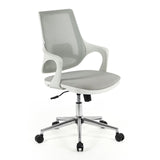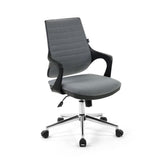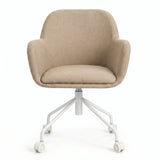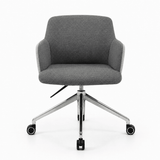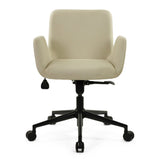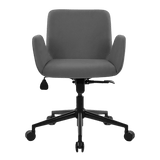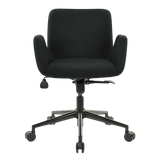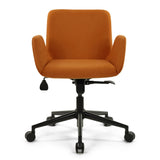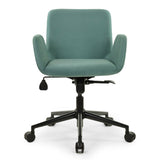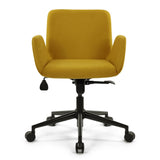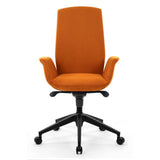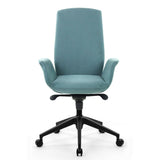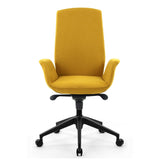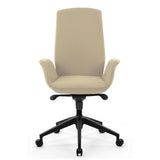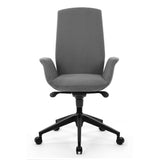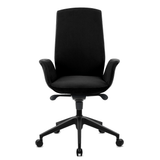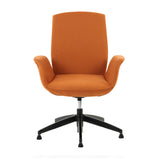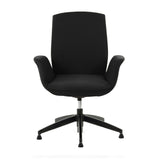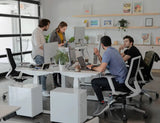
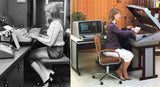
If you're reading this in your office or home workspace, chances are you're sitting in a chair. A chair that, at first glance, seems ordinary, but embodies decades of social, economic, and technological transformation. With its swivel base, casters, adjustable tilt, and sometimes ergonomic lumbar support, the modern office chair is much more than a mere utilitarian object: it's an artifact of the world of work.
To understand how we arrived at these dynamic mesh and metal sculptures, we must explore the fascinating history of the office chair. This story, which dates back to the Victorian era, reflects not only developments in design, but also transformations in society and ways of working.
The beginnings: The Industrial Revolution and the birth of the office chair
Before the 19th century, most people worked in fields or artisan workshops. Chairs were a luxury reserved for the elite, particularly civil servants and academics. But everything changed with the Industrial Revolution.
The railway boom and the rise of manufacturing created a greater need for administrative coordination. For the first time, middle managers and accountants emerged as central figures in the economy. It was in this context that the concept of the office chair took shape. Ensuring office workers were comfortable became imperative to improve productivity.
One of the first innovations in this field was the work of Charles Darwin, who, in the 1840s, added casters to a conventional chair to better access his specimens in his laboratory. Although rudimentary, this invention already foreshadowed the fundamental principles of modern office chair design.
The Centrifugal Chair: A Revolutionary Victorian Design

The true turning point in the history of office chairs came in 1851 with the creation of the Centripetal Office Chair by Thomas Warren. Presented at the Great Exhibition in London, this chair, made of cast iron and upholstered in velvet, introduced advanced features: full tilt, rotating seat, and casters.
However, this revolutionary chair was met with skepticism. Victorian standards considered excessive comfort morally suspect. Despite its international commercial failure, it laid the foundation for future innovations in ergonomic seating.
The Early 20th Century: The Era of Architectural Design

With the advent of modern offices in the early 20th century, the aesthetics of office chairs became increasingly important. But comfort remained secondary. A prime example is the chair designed by Frank Lloyd Wright for the Larkin Building in 1904. This chair, although equipped with a height-adjustable mechanism, was rigid and not very ergonomic. Some variations, such as the infamous three-legged “suicide chair,” demonstrated the designers' indifference to user comfort.
At this time, furniture design was more an extension of architectural principles than a response to human needs. However, the foundations for a more user-centered approach were being laid.
The Post-War Era: A Scientific Approach to Design

After World War II, office chair design underwent a major transformation. Ergonomic research, derived from military and industrial needs, was applied to civilian work environments. The use of new materials such as aluminum and plastic allowed for the creation of lighter and more functional chairs.
Charles and Ray Eames's famous Aluminum Group Chair , with its elegant lines and practical casters, exemplified this evolution. However, despite these advances, ergonomics was not yet a priority; aesthetics still dominated.
The 1970s to Today: The Rise of Ergonomics

The 1970s marked the beginning of the era of ergonomics. Spurred on by books like Niels Diffrient's Humanscale and legislation such as the OSHA Act of 1970, manufacturers began incorporating ergonomic principles into their designs. These developments responded to growing health concerns, such as carpal tunnel syndrome.
William Stumpf's Ergon Chair , launched in 1976, was a major innovation. Using molded foam to adapt to the body's natural posture, it paved the way for even more advanced models, such as the famous Aeron Chair , which used breathable materials and cutting-edge technologies to provide unparalleled comfort.
The Future of Office Chairs
While research shows we should reduce the amount of time we spend sitting, office chairs continue to evolve to meet modern needs. Future designs may favor lighter, more modular structures, allowing for flexible use for specific tasks.
However, the main challenge remains accessibility. The best chairs on the market, with their high-quality materials and advanced engineering, remain out of reach for many workers. Moving forward, innovation will also need to address how these products are manufactured, sold, and used to democratize access to ergonomic comfort.
The office chair, the product of a century of transformation, is much more than just a piece of furniture. It tells the story of our relationship with work, our technological advances, and our quest to reconcile productivity and well-being. So, the next time you settle into your chair, take a moment to appreciate this symbol of the modern world.